This fits perfectly with OWLSystems’ positioning around:
- Engineering Pods
- Long-term ownership
- Managed Operations
- Delivery accountability
Most agencies talk about speed.
Very few talk about what happens after the first release.
Introduction
Organizations often focus on how quickly software can be delivered.
Questions like:
- How many developers do we need?
- How fast can we launch?
- How quickly can features be released
While speed matters, many platform failures happen after launch, when continuity disappears.
The Velocity Trap
Many organizations experience:
- Developer turnover
- Agency changes
- Knowledge loss
- Inconsistent code quality
- Repeated onboarding cycles
The result:
A platform that moves quickly initially but becomes harder to maintain over time.
Why Continuity Creates Long-Term Value
Continuity provides:
- Architectural consistency
- Faster issue resolution
- Better documentation
- Stronger product knowledge
- More predictable delivery
Teams that stay close to a platform over time make better decisions than teams constantly starting from scratch.
The Hidden Cost of Team Changes
Every team transition creates:
- Knowledge transfer effort
- Lost context
- New learning curves
- Delivery delays
Organizations often underestimate these costs.
Engineering Ownership vs Resource Allocation
The goal is not simply assigning developers.
The goal is establishing ownership.
Ownership means:
- Understanding platform history
- Understanding technical debt
- Understanding business priorities
- Being accountable for outcomes
What High-Performing Organizations Do Differently
Successful organizations:
✓ Maintain delivery continuity
✓ Reduce unnecessary team changes
✓ Preserve platform knowledge
✓ Focus on long-term engineering health
✓ Balance speed with sustainability
Conclusion
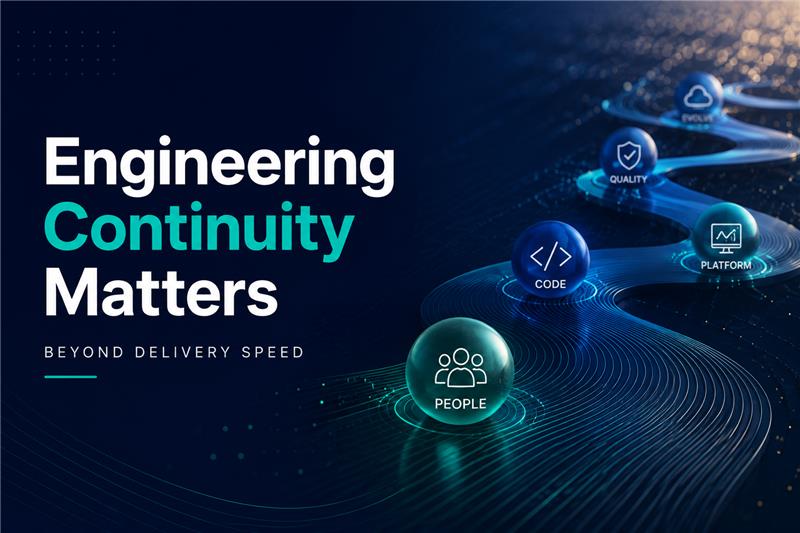
Fast delivery launches products.
Engineering continuity keeps products evolving.
Organizations that prioritize continuity build platforms that remain reliable, scalable, and maintainable long after the initial release.